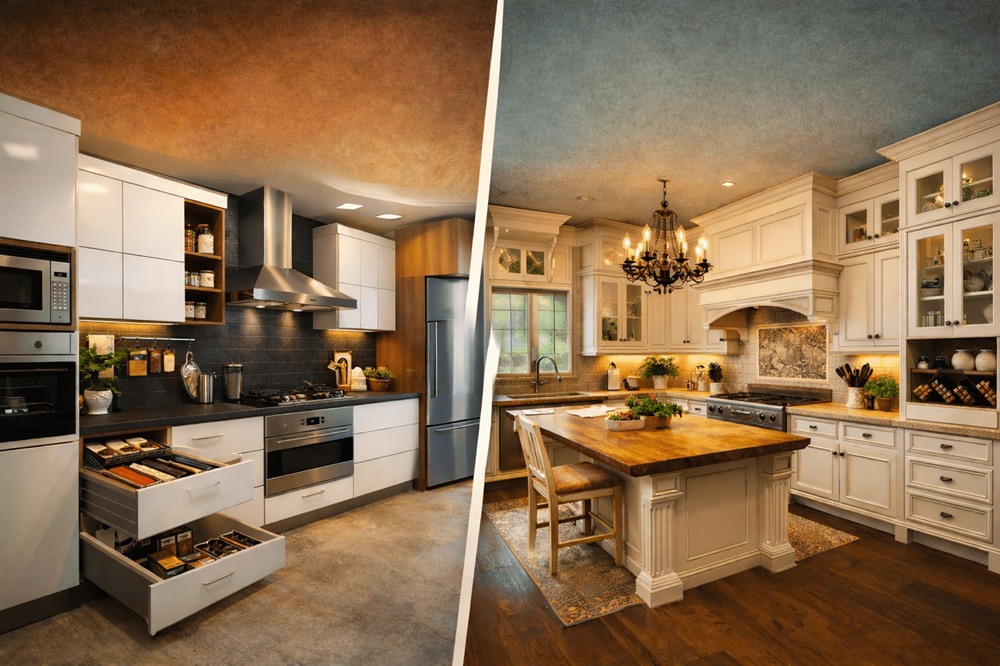
Choosing between modular and custom interiors is a common dilemma for homeowners and businesses. Both options have their advantages, but selecting the right one depends on your style, budget, and functional needs.
1. What Are Modular Interiors?
When you create a space to live and work, you typically have access to a selection of modular components and interior products, including kitchen modules, wardrobes, and workplace furniture that combine or can be organised in many different ways. These products are generally produced in factories and can be delivered to your location for final placement.
Advantages of Modular Interiors:
- Modular units can typically be assembled faster than fully custom units because their pre-manufactured parts make it easier to put them together.
- Because many manufacturers use standard modular designs, they produce these goods more cheaply than they do other products and consumers benefit by being able to buy these goods at lower prices.
- Modular components are flexible — they can be modified or swapped out depending on evolving needs or how you operate.
- All modular interiors are likely to have a consistent level of quality and standardization among each of their different components.
Limitations of Modular Interiors:
*Limited Customization: You may have fewer options for unique designs or unconventional layouts.
*Standard Sizing: Modular units may not perfectly fit irregular spaces.
2. What Are Custom Interiors?
Custom interiors are made uniquely by you based on your area, requirements and style. Each part of the interior (furniture, finishing etc.) is designed according to your liking. High end residences, boutique offices or other types of uncommon structures will use this.
Advantages of Custom Interiors:
-Customized Means Something Is Unique To You! All Of Your Design Elements Are Representations Of You; Therefore, Everything About Your Project Should Be A Reflection Of You And Your Personal Style.
-Perfectly Integrated Means That The Way You Arrange Your Furniture And The Way You Design Your Room Will Be The Best Possible Fit For The Configuration Of Your Room And What You’re Putting In It; Instead Of Having To Fit Into Existing Dimensions, It Will Be Perfectly Fit To What You Put In It.
-Customized Aesthetics Ensures That The Look And Feel Of Your Space Will Be Unique To You While Also Being Functional And Aesthetically Pleasing.
Limitations of Custom Interiors:
*Higher Costs: Customization and labor often make this a more expensive option.
*Longer Timelines: Designing and building everything from scratch takes more time.
3. Factors to Consider When Choosing
Comparison of Modular vs. Custom Interior Solutions
Pricing: Modular Options Are More Affordable Unless Tailored to the Individual’s Style
Timeliness: The Time Frame for Modular Options Is Quicker Than for Custom Options.
Space: Spaces that Are Irregularly Sized or Shaped Generally Require a Custom Solution.
Flexibility to Grow: One of the Benefits of Modular Solutions Is That over Time, You Can Update your Space to Adapt to Changing Needs.
4. Hybrid Approach
In recent years, many people have been considering using both modular and custom components when planning their new kitchen and wardrobe projects in order to achieve a hybrid method of construction. Most of the primary components, including cabinets, countertops, flooring, etc., use MODULAR methods while using the CUSTOM/SPECIALIZED pieces only as accessories or to make stand-alone pieces. This hybrid approach can contribute to reducing costs, enhancing productivity while being constructed and providing many different ways for you to add something personal
As there is no singular answer to the question of whether residential or commercial end-users should use modular or CUSTOM INTERIORS, the decision about which product will best meet your needs will be determined by several key considerations:
- your economic status
- your target completion date
- the total square footage available; and
- your design aspiration.
In addition to being able to install/use both types of furniture easily, cost-effectively, and versatile in design, flexible in design options, and allow for adding custom and unique designs into your environment.
Benefits
There Are Other Benefits to including both types of interiors, including: assistance with installation and use; cost-to-value ratio; flexibility of design options; and the opportunity to include one-of-a-kind CUSTOMIZED pieces in your space. If you would like to learn more about the best type of interiors for your needs.